When people dream about living on a boat, their minds usually go straight to the romantic parts — turquoise water, sunsets that look unreal, the freedom to raise anchor and just go. But there’s one piece of the dream that hits harder than anyone expects:
Choosing the right boat.
And if I’m being honest? We rushed it. We made some mistakes. We also learned more than we ever expected.
My hope is that by sharing our real story — the good, the bad, and the “wow, we did not think about that” moments — you’ll feel more confident choosing the boat that fits your life, your family, and your cruising goals.
⛵ Our Boat: A Snapshot of Where We Started
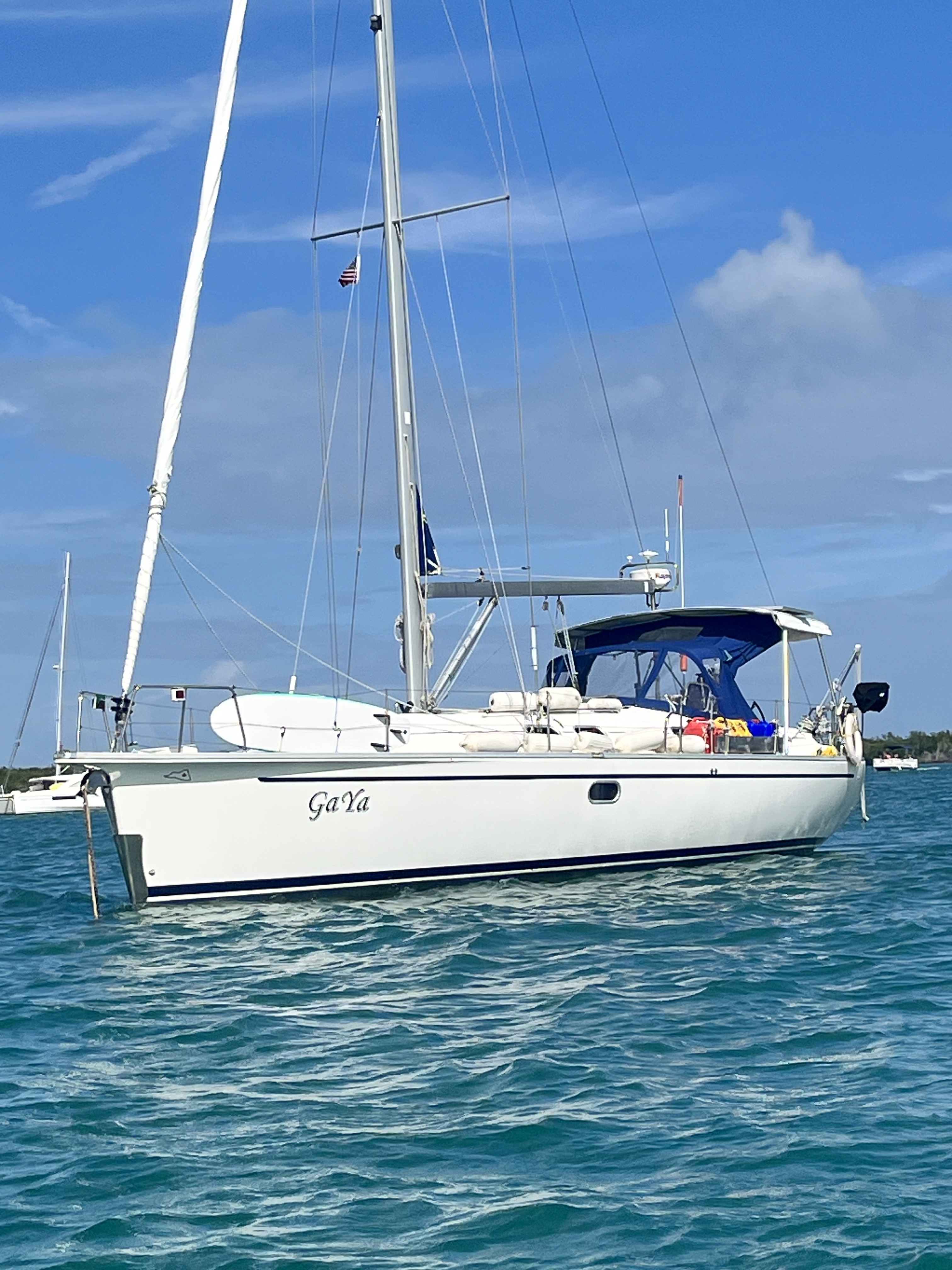
We live aboard a 2003 Dufour Gib’Sea 41 — a monohull with three cabins and two heads. On paper, it checked a lot of our boxes:
A big, open layout
Space for our daughter, Chloe
A comfortable cockpit
Nice responsiveness while sailing
A beautiful interior
And let’s be honest… it was available, in our budget, and we were excited.
We only looked at one other boat before buying this one. And that’s where our first lesson came in:
Don’t let excitement rush you into choosing your floating home.
🔱 What We Thought Mattered (But Didn’t)
When we first moved aboard, we were convinced that a big, open layout was the #1 priority. In a house? Sure. But on a cruising sailboat?
Not always.
After two years of sailing up the East Coast, crossing to the Bahamas, and living aboard full-time, we learned:
➤ Wide-open spaces can become unsafe in rough seas.
Smaller, more compact layouts give you handholds, safe corners, and places to brace yourself underway.
We never considered that when we bought the boat — and honestly, we should have.
What We Didn’t Prioritize (But Should Have)
Here’s where the real lessons start showing up — the stuff we didn’t even think about until we lived aboard full time.
1. Draft matters. A LOT.
Our 5’6″ draft makes parts of Florida and the Bahamas stressful. Shallows are everywhere, and our boat is just a little too deep for comfort.
2. An inverter isn’t optional for liveaboard life.
We didn’t have one. Which meant remote work? Charging devices? Using anything more than the basics at anchor?
→ Generator time (a.k.a. loud and annoying time).
3. AC/heat on a boat is not a luxury — it’s survival.
Especially in Florida or when cold snaps hit.
4. The galley location is more important than people think.
Ours is in the middle of the boat. Which means: if I’m cooking, everyone else is climbing over or around me.
A U-shaped or corner galley would’ve made life smoother.
5. Age of rigging is a hidden cost.
Original rigging on a 20-year-old boat? Yeah… that’s a $6,000–$8,000 surprise.
6. Displacement matters for comfort underway.
Light-to-moderate displacement boats are responsive — but they also rock more in heavier seas. We now know we’d prefer a heavier boat.
7. A full keel brings peace of mind.
My husband, Dustin, really wanted this. We rushed, and we didn’t get it. Now he worries about keel damage constantly.
🏝️ How We Actually Use Our Boat
We’re full-time liveaboards. We coastal cruise. We hop offshore when weather allows. We run the ICW when conditions get snotty. We cross to the Bahamas whenever we can.
All of that means our boat needs to handle:
Ocean swell
Tight ICW shoals
Extreme Florida temps
Long stretches at anchor
Remote work
Family life in small spaces
So while we love our boat, we now know it’s not the perfect match for our long-term needs.
Our Advice for Choosing the Right Boat
If you’re shopping for a liveaboard boat, here’s the advice we wish someone had given us:
1. Don’t rush.
Excitement is intoxicating — but it can cloud judgment.
2. Make a family priority list.
Not just what you want… But why you want it.
3. Ask every question — and get the answers in writing.
4. Think in terms of comfort, not looks.
5. Choose safety features intentionally.
6. If you plan to work remotely, make sure you have:
An inverter
Adequate house battery bank
Solar
Ventilation
And a space to actually sit and work
7. If you’ll be cruising the Bahamas or Florida:
Draft matters. A lot.
8. Try to find a boat with a watermaker.
Or budget for one early. It changes everything.
⛵ So Was Our Boat the “Right” Boat?
The truth is complicated.
We love our Dufour Gib’Sea 41. She’s beautiful, responsive, and capable. She has taken us safely up and down the entire East Coast and over to the Bahamas — twice.
But we also know she’s not our forever boat.
We rushed. We were excited. And we didn’t fully understand what we needed until after we lived aboard.
And that’s the real lesson: You don’t need the perfect boat. You need the right boat for where you are in your journey — and the willingness to evolve from there.
If You’re Choosing Your First Liveaboard Boat…
Take a breath. Take your time. Ask the annoying questions. Walk away from boats that don’t feel right. And pick the boat that supports your lifestyle, not just your daydreams.
Please note: After you click “Subscribe”, you will receive an email to confirm your subscription. If you don’t see it in your inbox, try checking other folders (spam, social, etc.). Thanks for subscribing!
2 responses to “Choosing the Right Boat for Full-Time Living: What We Wish We Knew Before We Bought Ours”
Steve
I love that you are helping with advise. I am currently looking at dufour 39-43 range but a bit newer. I used to have a hunter 460. Anyrate I have created a checklist and would love to have any input you may have. I plan on refining this list and when 90% baked share with anyone – if it helps them. You can see it here. https://stephencork.godaddysites.com/
Hi Steve. Thanks for taking the time to read the article.
I took a look at your website. It looks like a form that people fill out regarding the history and current condition of their boat. That’s an excellent idea, and it will help future buyers. I think it will build trust because of the transparency. For example, you’ve included a section for the owner to list any previous major groundings and keel damage. I also love the carousel of sailing tips that you have available on your site. It covers several situations that sailors might unexpectedly find themselves in. And from the location map, it looks like you are in Panama. Is that right?
The list on your website is pretty thorough, but I did notice one thing that is missing. You have a section to declare whether there is a water maker, but I couldn’t find anywhere to declare water tank capacity (maybe I overlooked it). This information would be pretty important for new buyers who don’t yet have a water maker but plan to anchor as much as possible. A larger water tank capacity would allow them to stay anchored longer without having to go to a marina very often to refill.
But overall, the list has just about everything that a new buyer would need to know, including many things I wouldn’t have even thought about. Great work!


Leave a Reply